
01
Connect Everything
Your TMS, ERP, telematics, IoT, EDI. All of it. Truzer aggregates the complex and maps it into a single unified ontology. No rip-and-replace. No 18-month implementation. Your systems keep running.
Insurance claims automation built for TPAs, carriers, and self-insured operators. One pipeline ingests every channel, AI validates every field at the source, and every step writes its own audit trail. No rip-and-replace. No 10-year integration.
Insurance claims automation is the use of software to take a claim from First Notice of Loss to closure without manual re-keying. A modern automation platform ingests every intake channel into one pipeline: EDI 837, email, PDF, photo, fax, and API. AI extracts the policy number, claim amount, date of loss, diagnosis, and codes from each document. Validation runs at the source, not at adjudication, so errors are caught before reserves are set and cash moves. Every step is timestamped and source-tagged, and the audit trail builds itself. The platform sits on top of the carrier's existing claims system. The outcome is faster cycle time, fewer denial disputes, and a pipeline that scales without a bigger team.
What parts of the claims process can be automated?
A modern claims automation platform handles the full intake-to-adjudication lifecycle:
Truzer.ai is the automation layer built for this. Deployed in 48 hours. No rip-and-replace. An audit trail at every step.

Craig and Michael have spent 10+ years aggregating the complex for 1,000+ organizations. In claims, fragmented data shows up as files stuck in intake queues, payouts that clear late, and audit trails no one can assemble on demand. Truzer.ai is what they built so the operators living with that reality every quarter stop fighting their own pipeline.
Book a Founders Call





Built for TPAs, carriers, and self-insured operators running automated insurance claims processing at scale. Sits on top of Guidewire, Duck Creek, or your existing system.
Cut intake from multiple systems to one. EDI 837, email, PDF, photo, fax, and partner APIs land in the same workflow. No more re-keying between portals. No more “which inbox is this in?”
AI extracts policy numbers, claim amounts, dates of loss, diagnosis codes, and CPT codes from every document. Mismatches get flagged the moment a claim lands, not at adjudication. Reserves get set on validated data, which is what your CFO needs to forecast cleanly.
Every claim, every stage, every SLA clock on one control tower. Bottlenecks surface before they cost you. The answer to “where is this claim?” is the same for everyone.
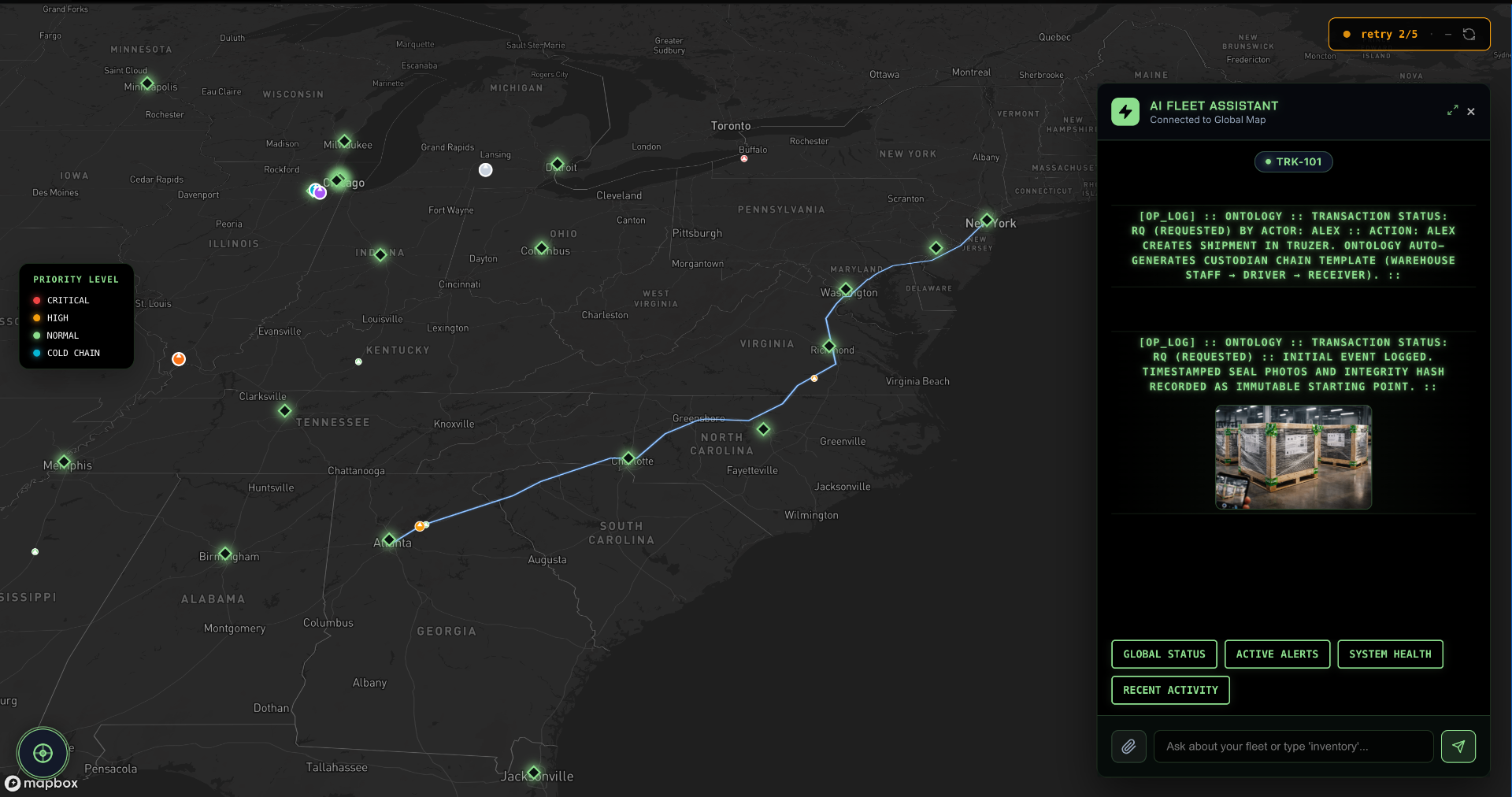
Every step is timestamped and source-tagged in real time. Events land in Truzer's ontology, a live digital twin of every claim, channel, and adjuster. When the regulator asks, the trail is already there, which is the point.
Two ways to run a claims operation in 2026. One of them is getting expensive.
Adjuster capacity
Intake
Recovery
Reserve setting
Audit trail
Deployment
Commitment
48 hours from now, your claims pipeline is either still leaking or it's live.
Every business we’ve transformed over the past decade was inflicted with the same limitations. Here’s how we fix yours.
Your TMS, ERP, telematics, IoT, EDI. All of it. Truzer aggregates the complex and maps it into a single unified ontology. No rip-and-replace. No 18-month implementation. Your systems keep running.
Right away you’re immersed into a complete visual experience. Seeing everything in real time. Your whole operation, stupidly visible. Not yesterday’s report. Not a dashboard silo. The truth, live, now.
The ontology doesn’t just show your data. It maps how every asset, route, team, customer, and regulation connects to each other. When one thing changes, you already know what it affects. All truth. No fiction.
AI agents monitor your operation 24/7. They flag exceptions, lock down compliance violations, send proactive customer updates, and surface revenue opportunities. Grounded in your ontology. Not hallucinated from generic training data.
Claims automation cuts cycle time, lowers leakage, and builds an audit trail at every step. Adjusters stop re-keying and start adjudicating. Reserves are set on validated data, not bad data. Recovery flags are raised at intake instead of weeks later. Fraud checks run on every claim before adjuster assignment, which is the part of the workflow most carriers skip when adjusters are buried. And the audit trail is built in real time, so when the regulator asks, the answer is already there.
No. AI amplifies adjusters. It does not replace them. Intake, extraction, validation, and routing run automatically. Adjudication, complex investigation, and the final call stay with the adjuster. The result is one adjuster handling more claims with less stress, because the work that does not require their judgment is gone. Truzer runs human-in-the-loop by design. The AI extracts and flags. The adjuster decides.
Truzer ingests every channel into one pipeline. EDI 837 and X12 transactions, email attachments, PDF claim forms, scanned photos, fax submissions, and partner APIs all land in the same workflow. AI extracts the structured fields from each document, including handwritten notes and nested medical billing tables. The output is one normalized feed into your existing claims system. No more re-keying between portals. No more “which inbox is this in?”
No. Truzer sits on top. Your existing core system keeps the policy data, the financial reporting, and the regulatory record. Truzer pre-processes every claim before it reaches that system, so the data lands clean, validated, and structured. The carriers and TPAs we work with do not want another core system migration. They want the one they already paid for to stop being the bottleneck. That is the job Truzer does.
48 hours. The intake layer connects to your channels. The extraction models map to your document types. The validation rules align with your policy logic. Most carriers, TPAs, and self-insured operators are processing live claims by the end of the second day. No rip-and-replace. No multi-year integration.
Book a call with Craig and Michael. Walk through your stack. See your own claims, your own channels, your own audit trail, running on Truzer.