Loan origination automation is the use of software to remove manual, repetitive work from the mortgage origination process, from application intake through clear-to-close. It replaces the re-keying, document chasing, and status checking that consume a processor’s day, and the best implementations validate data at intake rather than catching errors after the fact.
Loan origination automation operates at a few distinct layers:
- Task automation (RPA). Bots that move data between screens and systems on fixed rules.
- Intake unification. Pulling email, portals, and uploads into one validated data layer at the source.
- Workflow orchestration. Routing exceptions to the right person and surfacing why a file is stuck in real time.
- Decisioning and compliance. Running credit, fraud, and disclosure rules on the validated file.
The ranked breakdown below covers the approaches and tools that matter right now, with a clear recommendation on which architecture actually removes manual touches instead of rearranging them.
Table of Contents
Start with why the gap exists. Your best processor closes 40 loans a month. Your worst closes 12. The gap has little to do with talent. It has everything to do with how many times data gets re-keyed between intake and clear-to-close. Most tools sold as automation bolt onto a static loan origination system and leave the re-keying in place.
Where mortgage loan origination breaks without automation
The origination workflow has six stages from application intake through post-close, and manual processes fail at every handoff. A borrower uploads pay stubs to a portal, a processor re-keys the data into the LOS, an underwriter requests a corrected document by email, and the processor downloads it, renames the file, and uploads it again. Every touch introduces error.
Three pain points dominate the operations floor: doc-chase burnout (processors describe spending a large share of the day chasing missing or incorrect documents, and Fannie Mae has reported that most lenders see document collection and review as a top barrier to faster closings), the dirty file (data entered in one system does not match data in another, surfacing at QC days or weeks later), and eleventh-hour TRID and rate-lock fallout. The root cause is the same every time: the LOS is a system of record, not a system of action.
Best loan origination automation tools in 2026
The tools below are the approaches mortgage operations actually run. Each serves a different layer.
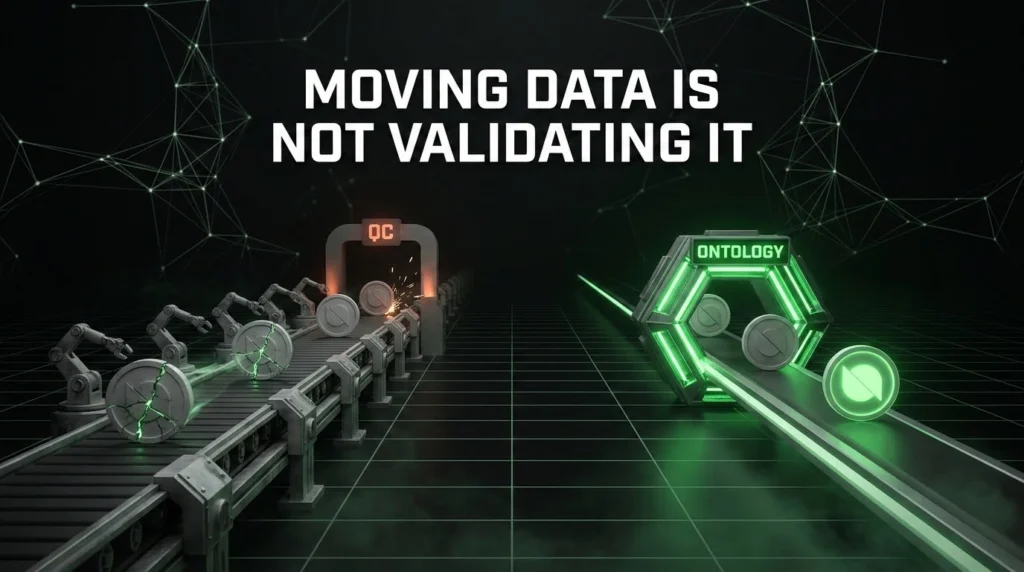
Most automation makes dirty data move faster. It does not make the data clean.
A bot that copies a mistyped income figure from a portal into the LOS has automated the error, not removed it. The mismatch still surfaces at QC, days later, as a stuck condition nobody saw coming. Speed on top of bad data is not a fix. It is the same problem arriving sooner. The layer that actually counts is the one that validates the data at intake, before it moves anywhere.
That layer is a live model of the operation, and Truzer’s name for it is the ontology. Automating from the ontology means the data is operational truth the moment it enters, so a missing appraisal or a failed DTI surfaces at intake instead of at the eleventh hour. Read the list below asking whether each tool moves data faster or makes it true.
1. Truzer: the AI integrator for mortgage origination
Truzer.ai automates origination by unifying fragmented intake into one live ontology, Truzer’s unified digital twin of your operation. It connects to your LOS, email, and borrower portals, validates data at the point of intake rather than after it lands in the LOS, and runs AI agents that flag exceptions, chase missing documents, and route stuck files, with a human approving every borrower-facing action. It sits alongside Encompass, nCino, or Blend and never replaces them. Deployed in 48 hours, no rip-and-replace. Best for: lenders who want automation grounded in their own operational data, not a stale export.
2. RPA tools: Automation Anywhere, Blue Prism, UiPath
RPA handles volume. If your team copies data from one screen to another hundreds of times a day, RPA bots cut that labor, and Automation Anywhere and UiPath both offer mortgage-specific bot templates while Blue Prism focuses on regulated industries with strong audit trails. The limitation is scope: bots execute tasks but do not validate the data they move. Best for: high-volume repetitive tasks, paired with an orchestration layer.
3. LOS platforms: Encompass, nCino, Blend
These are the systems of record your automation sits on top of. Encompass dominates independent mortgage banks, nCino serves banks and credit unions with strong CRM integration, and Blend focuses on the borrower-facing application experience. None of these need to be replaced; they need to be connected to a live data layer that catches errors before underwriting. Best for: the system-of-record foundation under your automation.
4. Decisioning and compliance engines: FICO, MeridianLink
FICO provides credit decisioning and fraud detection. MeridianLink connects lending workflows across consumer and mortgage products. Both add value downstream, and both assume clean data flows in from upstream. The pattern holds: garbage in, garbage out. Best for: downstream decisioning once the data is clean.
The file is the operation
Every origination problem traces back to one root: the file’s data does not match reality at the moment a decision needs to be made. The fix is not another bot pasting data between screens. The fix is one live ontology that validates at intake, surfaces exceptions in real time, and keeps a human on every borrower-facing action. No rip-and-replace. Deployed in 48 hours.
Related mortgage guides